


The Ultimate Daily Routine for Traders: Food, Exercise, and Mindset Tips for Peak Performance
The ultimate daily routine for traders combines three pillars: smart food choices, consistent exercise, and a deliberate mindset practice that brackets every session. Your edge on the screen is only as sharp as the brain running it. When you sleep poorly, skip breakfast, sit for eight hours straight, and stare at charts until midnight, your decisions get slower, sloppier, and more emotional. Trading demands clarity, focus, and resilience, and those qualities are built long before the opening bell. In this guide, we walk through a complete trader-friendly routine: how to start your morning, what to eat, when to move, how to structure trading and break time, how to wind down, and how to run a weekly review that keeps the whole system improving.
Peak trading performance is a lifestyle outcome, not a screen skill alone. A repeatable routine of quality sleep, steady-energy meals, daily movement, planned breaks, and honest reflection protects your decision-making when markets get fast. Consistency beats intensity every time.
| Morning mindset | 5 to 10 minutes of breathing or meditation before opening any chart |
| Breakfast formula | Protein + healthy fat + complex carbs, plus a glass of water first |
| Movement | 10 to 30 minutes daily, ideally before the open or after the close |
| Break rhythm | Pomodoro (25 on, 5 off) and the 20-20-20 eye rule |
| Reflection | 5 to 10 minutes nightly, about 1 hour weekly |
| Sleep target | 7 to 8 hours on a consistent schedule |
How Should a Trader Start the Morning?
Start with a calm mind and a clear plan before you look at a single quote. Your first 30 minutes set the emotional tone for the entire session, so protect them.
If you grab your phone and check pre-market movers while still in bed, you are reacting before you have had a chance to think. Reverse that order. Build clarity first, then bring in market information.
Practice a Short Mindfulness Session

Spend 5 to 10 minutes in guided or silent meditation. Apps like Headspace or Calm make it easy if you are new to the practice. Even simple box breathing (inhale four counts, hold four, exhale four, hold four) can lower your stress response.
Step outside for a few minutes too. Fresh air and morning daylight help wake you up naturally and give your eyes a break before hours of screen time.
Set Trading and Non-Trading Goals
Write down two or three goals for the day. Include a process goal for trading, such as “only act on setups that match my plan,” and a personal goal like “finish my workout” or “call my parents.” This keeps you intentional and cuts down on impulsive decisions.
Once your head is clear, that is the time to build your morning watchlist and review the rules you laid out when you sat down to build a winning trading plan.
Take three slow, deep breaths right before you open your trading platform. It sounds small, but it creates a deliberate pause between “life mode” and “market mode,” and that pause is where discipline lives.
What Should Traders Eat for Breakfast?
Eat a balanced breakfast built on protein, healthy fats, and complex carbohydrates. That combination releases energy slowly, so you avoid the mid-morning crash that tends to show up right when the market gets busy.
Sugary cereals, pastries, and sweet coffee drinks spike your blood sugar and then drop it. A crash at 10:30 a.m. can mean foggy thinking and impatience, which are exactly the conditions that lead to forced decisions.
Trader-Friendly Breakfast Options

- Greek yogurt with berries and a handful of nuts
- Oatmeal topped with chia seeds and almond butter
- Eggs with avocado and whole-grain toast
- A sugar-free protein shake when you are short on time
Hydrate First, Then Caffeinate
Drink a full glass of water as soon as you wake up. Even mild dehydration can hurt concentration and reaction time.
Coffee can sharpen focus, but more is not better. Too much caffeine can amplify jitters and anxiety, and an anxious trader tends to click faster than they think. One or two cups is a sensible ceiling for most people.
| Choose This | Over This | Why It Matters |
|---|---|---|
| Eggs and whole-grain toast | Pastry or donut | Slower energy release, fewer crashes |
| Water, black coffee, or tea | Energy drinks, sugary lattes | Less jitter, steadier focus |
| Nuts, jerky, canned fish | Candy or chips | Protein and fat keep you full |
| Light, balanced lunch | Heavy, oversized meal | Avoids afternoon drowsiness |
How Does Exercise Improve Trading Performance?
Exercise lifts your mood, reduces anxiety, and improves focus, three things every trader needs. It also counteracts the physical toll of sitting at a desk for hours.
Think of movement as maintenance for your decision-making engine. A trader who moves daily tends to handle stress better, sleep better, and recover faster from a rough session.
The Best Types of Exercise for Traders

- Cardio: Running, cycling, or even a brisk walk builds endurance and energy.
- Strength training: Supports better posture and reduces strain from long hours of sitting. Push-ups, squats, and rows are a great start.
- Yoga or stretching: Releases physical and mental tension, especially in the neck, shoulders, and hips.
When to Fit It In
The best windows are before the market opens or after it closes. A midday workout during the slower lunch hours can also recharge you if the afternoon usually drags.
If you are short on time, start with 10 to 15 minutes. Consistency matters far more than intensity. A short walk every day beats one heroic gym session a week. For more ideas outside the gym, check out these hobbies that keep traders sharp.
How Should You Plan Trading Hours and Breaks?
Block specific times for preparation, active trading, and review, then schedule breaks just as deliberately. Structure reduces overtrading and protects you from burnout.
Without defined hours, the market slowly takes over your whole day. You end up watching charts out of habit rather than purpose, and that is when low-quality decisions creep in. If you are newer to how professionals structure their day, Investopedia’s overview of what a day trader does is a useful primer.
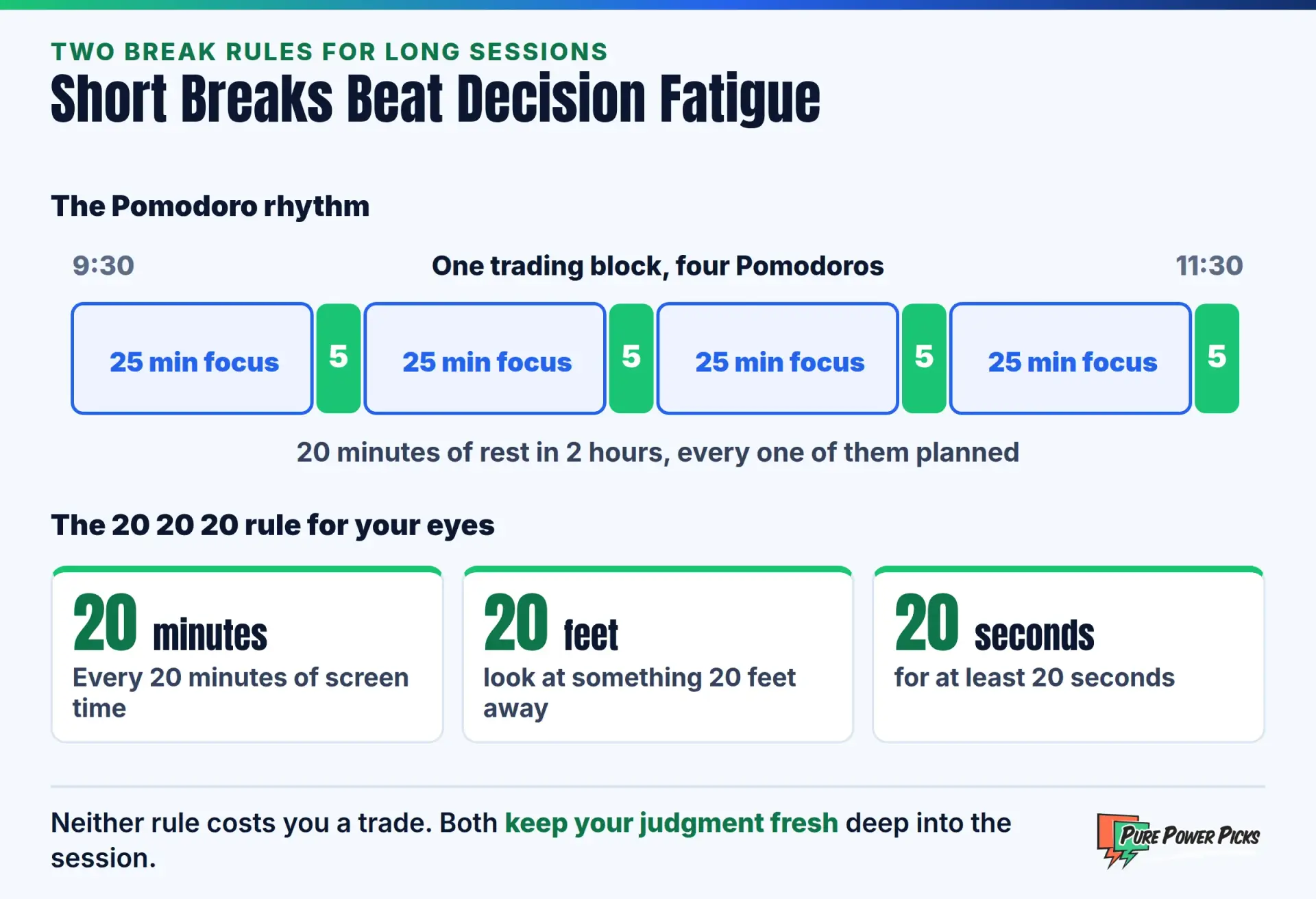
Decision fatigue is the gradual decline in decision quality after a long stretch of making choices. For traders, it often shows up late in the session as impatience, rule-bending, or chasing moves that do not fit the plan.
Use Proven Break Systems
The Pomodoro Technique (25 minutes of focused work, 5 minutes of rest) is a simple way to prevent decision fatigue. If that feels too rigid, take a short break at least once an hour.
Protect your eyes with the 20-20-20 rule: every 20 minutes, look at something 20 feet away for 20 seconds. Pair that with the right monitor setup and lighting from our guide to essential trading equipment.
A Hypothetical Daily Schedule
Here is a hypothetical example of how a part-time options trader might structure a weekday. Adjust the times to your own schedule, time zone, and style.

| 6:30 a.m. | Water, breathing, 10-minute meditation, daily goals |
| 7:00 a.m. | 20-minute walk or workout, then a balanced breakfast |
| 8:30 a.m. | Pre-market prep: watchlist, key levels, plan review |
| 9:30 to 11:30 a.m. | Focused trading block with hourly 5-minute breaks |
| 11:30 a.m. to 1:30 p.m. | Light lunch, step outside, stretch |
| 1:30 to 4:00 p.m. | Second block, smart snacks on hand |
| 4:15 p.m. | 10-minute journal review, then shut it down |
Fuel Your Afternoon With Smart Snacks

Midday energy dips are real, and the right snacks counter them far better than sugar. Keep nutrient-dense options within arm’s reach so you are never tempted by the vending machine.
- Nuts and seeds: Almonds, walnuts, and pumpkin seeds provide healthy fats, with walnuts offering plant-based omega-3s.
- Fresh fruit: Apples or oranges give quick energy with fiber to soften the spike.
- Vegetable sticks with hummus: Fiber, protein, and healthy fats in one.
- Beef jerky or canned fish: Portable, protein-rich, and filling.
Avoid heavy meals in the middle of your trading day. A big plate of pasta at noon can leave you drowsy right when afternoon volatility picks up.
Never trade options when you are exhausted, hungry, or emotionally rattled. Options can lose value quickly, and fatigue makes it far more likely you will ignore your risk rules. If you are not at your best, the smartest move is often to sit out. Review the SEC’s investor education resources at Investor.gov to understand the risks involved.
Why Is an Evening Wind-Down So Important for Traders?
Your evening routine determines how rested and clear you will be tomorrow. Reflection locks in the day’s lessons, and real relaxation lets your nervous system reset.
Reflect for 5 to 10 Minutes
Review the day’s decisions while they are still fresh. Note what went well, what you would do differently, and how you felt during key moments. Keeping a trading journal helps you spot patterns in your behavior that you would otherwise miss.
Pay special attention to emotional triggers. If frustration or excitement drove a decision, write it down. Our guides on mastering your trading emotions and how to control emotions while trading go deeper on this.
Detach From the Market

Once your review is done, close the platform. Constant after-hours monitoring feeds stress and steals time from family, friends, and rest. The market will still be there tomorrow.
Swap the charts for calming activities: reading, an evening walk, gentle stretching, or music. Shut off screens at least 30 minutes before bed, and aim for 7 to 8 hours of quality sleep on a consistent schedule. If a tough day is weighing on you, read our guide on how to recover from a big loss.
How Should Traders Run a Weekly Review?
Set aside about an hour each week to review your decisions, your habits, and the connection between them. This is where your routine evolves from good to great.
Connect Habits to Outcomes

Look at your best and worst decisions of the week, then check your journal. Did your weakest days line up with poor sleep, skipped workouts, or a sugary breakfast? These links are often obvious once you look for them.
Set Small Goals for Next Week
Pick one or two achievable goals, such as “journal every trading day” or “walk before the open four times.” Small wins reinforce good behavior. Stack good days on top of each other, over and over again. This is the foundation of the habits of great traders.
Keep Learning, in Measured Doses
Spend a few hours each week on education: strategy videos, options courses, or a chapter from our list of must-read trading books. The Cboe also publishes free options education. For a broader look at balancing markets and life, explore the trader lifestyle.
Use a dedicated notebook or app to track weekly progress, and celebrate milestones. Recognizing improvement keeps you motivated through the inevitable slow stretches. If you prefer software, our Tradervue review covers one popular trade journaling app.
Frequently Asked Questions
What is the best time of day for traders to exercise?
Before the market opens or after it closes works best for most traders because it does not compete with active hours. A midday workout during slower lunch hours is a strong alternative if your afternoons feel sluggish.
How much sleep do traders need?
Most adults do best with at least 7 to 8 hours of quality sleep. Consistency matters as much as duration, so go to bed and wake up at roughly the same time every day, including weekends.
Is coffee good or bad for trading?
In moderation, coffee can improve alertness and focus. Too much can increase anxiety and impulsiveness, so keep it to one or two cups and drink water alongside it.
How long should a daily trading review take?
Five to ten minutes is enough for a daily review. Note your decisions, your emotional state, and one lesson. Save deeper analysis for your weekly review.
Can a daily routine really improve trading results?
A routine cannot guarantee any outcome, but it supports the clarity and discipline that good decision-making depends on. For more on the mental side, see our mental tips for consistent trading.
Pair a Sharp Routine With Sharper Education
A clear head is half the equation. The other half is knowing what to look for on the chart. Pure Power Picks delivers educational options chart setups with the alert price, alert zone, and the reasoning behind each idea, so you can learn how experienced traders think in real time.
Questions about which plan fits your schedule? Use the contact form to reach out to our team anytime.
Explore Membership Plans
The PPP Team is the research and editorial team behind Pure Power Picks. We trade stocks and options and publish the work as we do it, with every alert tracked in public. Publishing since 2020. How we research and correct our work is written out in our editorial standards. Our content is strictly educational, never advice.
Disclaimer: The content on Pure Power Picks is for educational and informational purposes only and does not constitute financial, investment, health, or medical advice. We are not registered financial advisors. Options trading involves substantial risk and is not suitable for all investors; you can lose some or all of your investment. Any examples provided are hypothetical and for illustration only. Past performance and historical data points, including the high an alerted option reached, do not guarantee future results. Consult a licensed financial professional before making investment decisions, and consult a qualified healthcare provider before making changes to your diet or exercise routine.