


Best Hobbies for Day and Swing Traders to Stay Sharp Outside of the Market
The best hobbies for day and swing traders build the same mental muscles the market demands: focus, patience, emotional control, and clear decision-making under pressure. Mindfulness meditation, chess and strategy games, exercise, outdoor pursuits like fishing and hunting, creative work, reading, yoga, gardening, and learning new skills all deserve a spot on your calendar. Trading is intense. Hours of chart analysis and rapid-fire decisions drain your mental reserves faster than most people realize, and screen time alone leads straight to burnout. The right hobby does more than help you recharge. It trains your brain to stay calm, think in probabilities, and walk away from the screen without guilt. Here is how to pick the ones that fit your style.
Your hobbies are part of your trading process, not a distraction from it. Choose a mix that covers three needs: one that sharpens your thinking, one that moves your body, and one that fully disconnects you from screens. Consistency beats intensity, so start small and schedule it like a market open.
| Best for focus | Mindfulness meditation, chess, reading |
| Best for stress relief | Exercise, yoga, fishing, gardening |
| Best for fresh thinking | Drawing, painting, writing, learning an instrument or language |
| Minimum starting dose | 10 to 20 minutes a day, or one longer block on weekends |
| Biggest benefit | Lower burnout risk and steadier decisions during market hours |
Why Do Day and Swing Traders Need Hobbies Outside the Market?
Because your brain is your most important trading tool, and it needs recovery time just like a muscle. Without deliberate breaks, stress compounds, judgment slips, and you start making decisions you would never make with a rested mind.
Day trading compresses hundreds of micro-decisions into a few hours. Swing trading stretches the stress across days, with overnight gaps and weekend news keeping your mind on the charts long after the close. Either way, the market never really lets you off the hook unless you make it.
That is where hobbies come in. They give your mind a different job, one with no price ticker attached. If you are still shaping your schedule, our guide to the daily routine for traders shows how to build hobby time around the opening bell and the close.
Decision fatigue is the decline in decision quality after a long stretch of making choices. For traders, it often shows up late in the session as impulsive clicks, ignored rules, and revenge trading. Hobbies that rest the decision-making part of your brain help reset this tank.
Which Hobbies Sharpen Your Mind for Better Trading Decisions?
Mindfulness meditation and strategy games like chess are the two strongest picks. Meditation trains emotional control, while chess trains forward planning and risk assessment.
1. Mindfulness Meditation
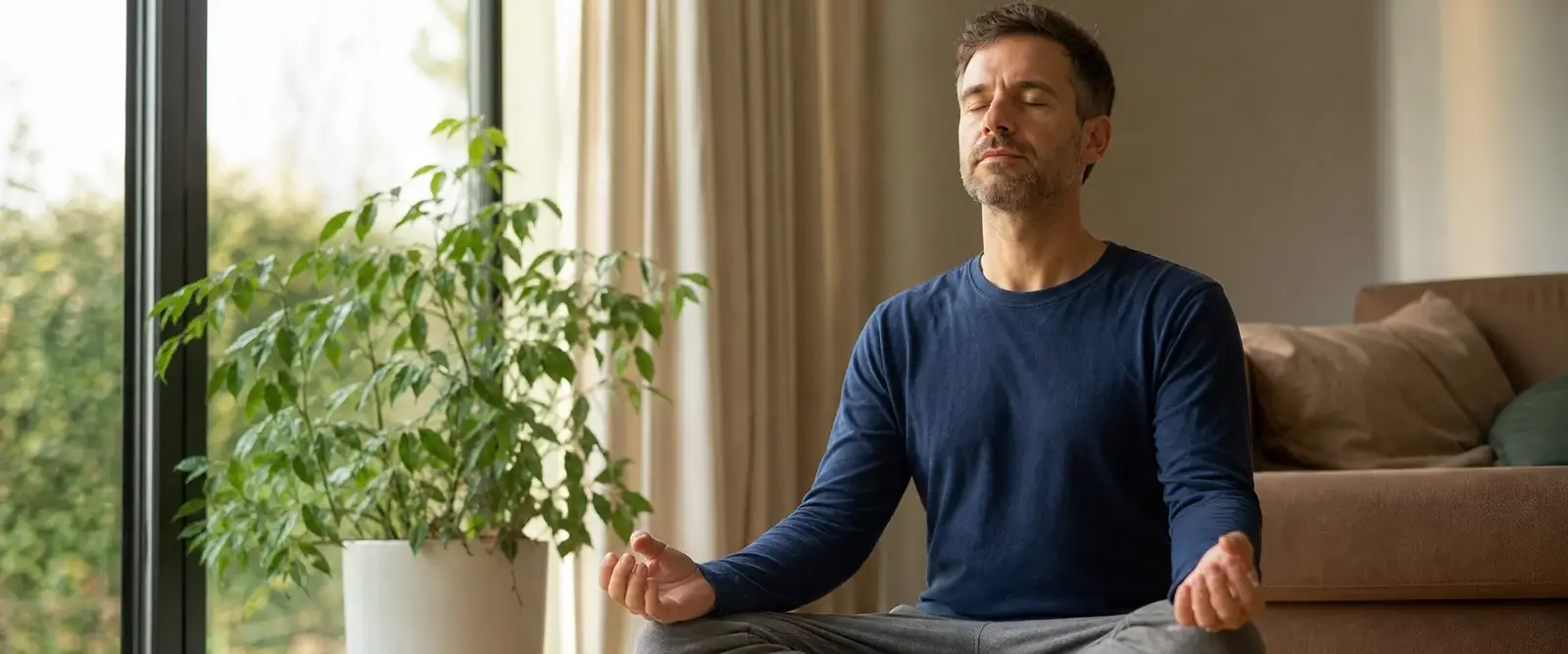
Why it helps: Trading rewards calm, clear thinking and punishes panic. Meditation practice is widely associated with lower stress, better focus, and stronger emotional regulation, which are exactly the traits you need when a chart moves against your plan.
How to start: Use an app like Headspace or Insight Timer and commit to 10 minutes a day. Once that feels easy, stretch to 15 or 20. Morning sessions before the open work especially well.
Trading benefit: Meditation teaches you to notice an emotion without obeying it. That skill is the backbone of mastering your trading emotions, and it is grounded in the same insights behind behavioral finance.
2. Chess or Strategic Games

Why it helps: Chess, Go, and poker demand critical thinking, patience, and planning several moves ahead. Poker in particular forces you to think in probabilities and accept that good decisions sometimes produce bad outcomes.
How to start: Chess.com and the free, open-source Lichess both offer puzzles, lessons, and casual games against players at your level. Ten puzzles a day is a solid habit.
Trading benefit: Strategy games train you to weigh risk against reward before you act, and to ask “what happens if I’m wrong?” every single time.
Be careful with hobbies that mimic the dopamine loop of trading. Real-money poker, sports betting, and casino games can reinforce the same impulsive habits you are trying to break. If a hobby leaves you chasing losses or feeling “tilted,” swap it for one with no money on the line.
Which Physical Hobbies Help Traders Handle Stress?
Regular exercise and outdoor activities like fishing, hiking, and hunting are the best stress valves for traders. They burn off nervous energy and pull you completely away from the screen.
3. Exercise and Physical Fitness

Why it helps: Physical health directly drives mental clarity. Exercise releases endorphins, improves sleep, and reduces anxiety, all of which make the stress of trading easier to carry.
How to start: Running, cycling, lifting, or a simple home routine all count. Many traders take a brisk walk after the close to process the session and clear their heads.
Trading benefit: Better fitness means steadier energy through long sessions and fewer afternoon crashes. It is one of the core habits of great traders for good reason.
4. Fishing, Hunting, and Other Outdoor Activities

Why it helps: Casting a line at a local creek, river, lake, or beach, or heading deeper into the wilderness for a hike or a hunting weekend with friends and family, resets your instincts. Nature runs on its own clock, and it reminds you that not everything moves tick by tick.
How to start: Your first step is a fishing or hunting license from your state wildlife agency, then the right gear. Fishing is much easier to pick up. Hunting takes more time and research, and most US states require a hunter education course before you can buy a license, so check your state’s rules first. Enjoy the freedom, and practice it responsibly and conservatively.
Trading benefit: Fishing is a masterclass in patience. You prepare, you set up in the right spot, and then you wait for the fish to come to you. That is the same discipline described in patience in trading: focus on the process, not the outcome of any single cast.
Leave the phone in the truck, or at least turn off market notifications. A fishing trip spent refreshing quotes is not a break. If you hold swing ideas over a weekend, set your plan and your risk levels before you leave so you have nothing to check.
Which Hobbies Help You Think Differently About the Market?
Creative hobbies and reading are your best tools for fresh perspective. One gives your analytical brain a rest, and the other fills it with new ideas.
5. Creative Hobbies: Drawing, Painting, or Writing

Why it helps: Creative work is a true break from numbers and charts. Making something with your hands or words lowers stress and lets your mind wander in useful directions.
How to start: Grab a sketchpad, a journal, or a set of paints. Plenty of free online lessons exist if you are brand new, and nobody needs to see your work but you.
Trading benefit: Creative thinking helps you spot patterns and setups others miss. Bonus: writing habits carry straight into a trading journal, which is one of the most valuable tools you can build.
6. Reading (Especially Non-Fiction and Biographies)

Why it helps: Reading builds concentration, a skill that endless scrolling quietly erodes. It also exposes you to psychology, history, and the hard-won lessons of investors who came before you.
How to start: Pick books on trading psychology, investor biographies, or mental performance. Thinking, Fast and Slow by Daniel Kahneman is a classic starting point, and our list of must-read trading books gives you a curated library to work through.
Trading benefit: Every good book adds frameworks to your toolkit. You start to recognize your own biases in real time instead of after the damage is done.
Which Low-Intensity Hobbies Help Prevent Trader Burnout?
Yoga and gardening are ideal when you need recovery without more mental strain. Both are calming, rhythmic, and easy to fit before or after market hours.
7. Yoga and Stretching

Why it helps: Yoga delivers the mental calm of meditation plus real physical upgrades: better posture, flexibility, and breathing. If you spend hours hunched over a desk, your back and neck will thank you.
How to start: Free YouTube tutorials and beginner yoga apps make it simple. A 10 to 15 minute session before the open or after the close is plenty to begin.
Trading benefit: Controlled breathing is a tool you can use mid-session. A few slow breaths before you act on an alert can be the difference between a planned decision and a reactive one.
8. Gardening or Nature-Based Activities

Why it helps: Working with plants or walking in nature is deeply calming and asks very little of your focus. It is the definition of a low-pressure reset.
How to start: Start small with herbs or succulents if space is tight. Your local garden center is a great place to ask questions and learn what grows well in your area.
Trading benefit: Gardening teaches that growth takes time and cannot be forced. That mindset is especially helpful if you are trying to recover from a big loss and need to slow down before getting back to the charts.
How Does Learning New Skills Keep a Trader Adaptable?
Learning something new keeps your brain flexible, and flexibility is what lets you adjust when market conditions change. Languages, cooking, and musical instruments are all excellent choices.
9. Learning New Skills (Languages, Cooking, Instruments)

Why it helps: New skills challenge your memory, discipline, and resilience. Being a beginner again also keeps your ego in check, which is never a bad thing for a trader.
How to start: Duolingo works well for languages, and YouTube has thousands of free lessons for cooking and instruments. Practice a little every day rather than cramming on weekends.
Trading benefit: Markets shift between trending, choppy, and volatile regimes. The habit of learning keeps you open to new approaches, which is one of the most essential trading skills you can develop.
Comparing the Nine Hobbies
| Hobby | Main Trading Skill | Time to Start | Cost |
|---|---|---|---|
| Meditation | Emotional control | 10 min/day | Free to low |
| Chess / strategy games | Risk assessment | 15 min/day | Free |
| Exercise | Energy and stamina | 20 to 30 min/day | Free to moderate |
| Fishing / hunting / outdoors | Patience | Weekend blocks | Moderate |
| Creative hobbies | Fresh perspective | Flexible | Low |
| Reading | Concentration, frameworks | 20 min/day | Low |
| Yoga | Breath control | 10 to 15 min/day | Free to low |
| Gardening | Long-term mindset | Flexible | Low |
| New skills | Adaptability | 15 min/day | Free to moderate |
Let’s walk through a hypothetical week. A swing trader meditates for 10 minutes before the open, walks for 30 minutes after the close, solves chess puzzles at lunch, reads a chapter before bed, and spends Saturday morning fishing. None of it takes heroic effort, yet every piece supports a calmer, sharper trading week.
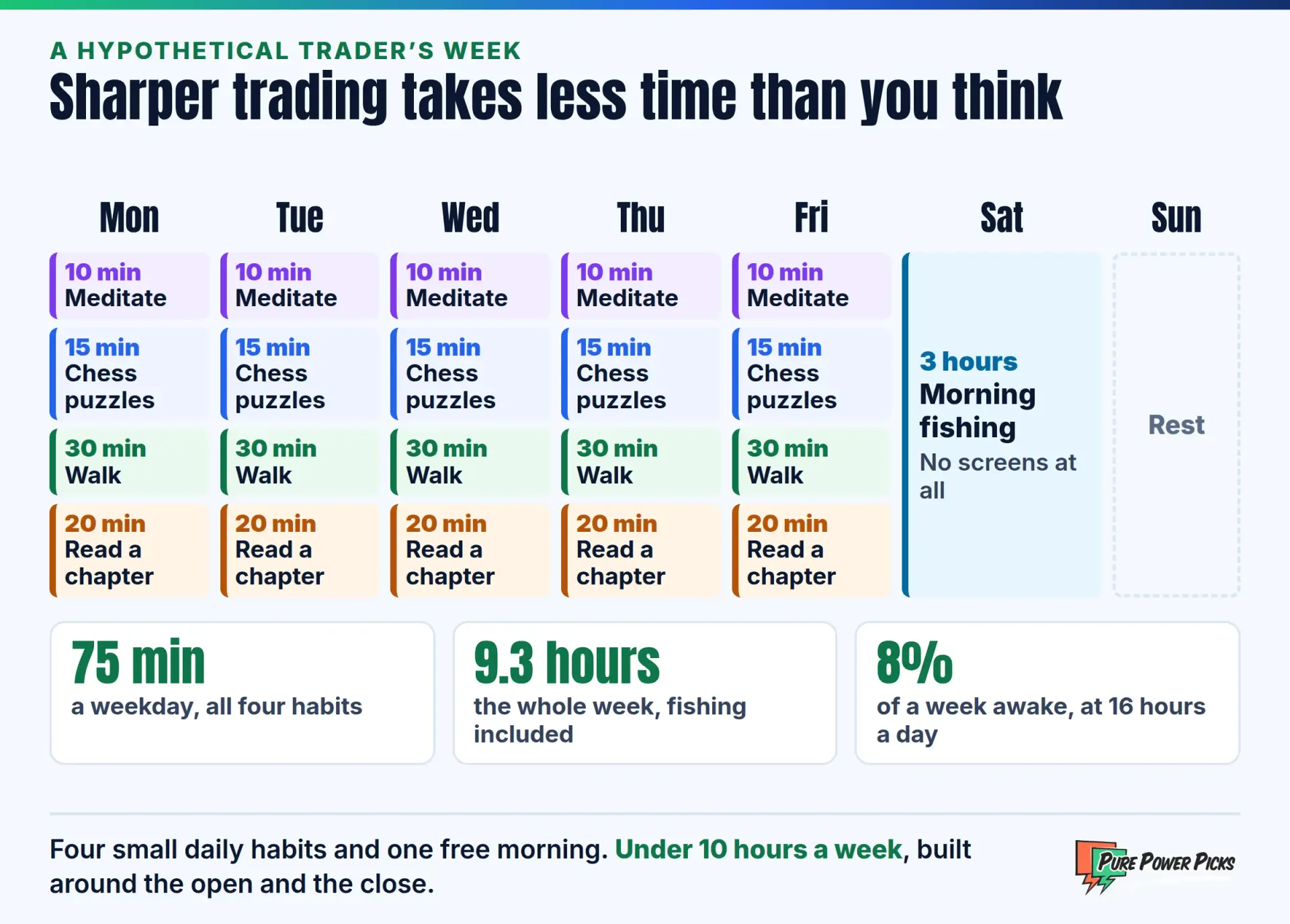
The bottom line: a balanced life away from the screen supports better trading on it. Pick two or three hobbies from this list, add them to your weekly routine, and watch how your focus and decision-making respond. For the bigger picture on balance, read our take on the trader lifestyle, and for in-session mindset work, these mental tips for traders are a great next step.
Frequently Asked Questions
What is the single best hobby for a day trader?
If you only pick one, start with mindfulness meditation. It directly targets emotional control and focus, takes just 10 minutes a day, and costs little or nothing. Pair it with some form of exercise as soon as you can.
How much time should traders spend on hobbies?
There is no magic number, but 30 to 60 minutes on most days is a realistic target. Consistency matters more than volume, so short daily sessions usually beat one long weekend burst.
Is poker a good hobby for traders?
Poker can teach probability thinking and emotional discipline. The danger is real-money play that feeds impulsive habits. Keep stakes small or play free versions, and stop if you notice yourself chasing losses.
Can hobbies really prevent trading burnout?
They are one of the most effective tools you have. Hobbies give your brain a different job and break the constant cycle of market stress. Combined with good sleep and a solid routine, they help keep burnout at bay.
Do swing traders need different hobbies than day traders?
The core benefits are the same, but timing differs. Day traders benefit from short resets before and after the session, while swing traders often need longer weekend activities that pull their minds away from overnight and weekend risk. Learn more in our breakdown of different types of traders.
Sharp Mind Off the Screen. Clear Plan On It.
Hobbies keep your head clear. Pure Power Picks helps you put that clarity to work with educational options chart setups, clear alert zones, and the reasoning behind every idea, so you keep learning how to read the market on your own terms.
Explore Alert Plans
The PPP Team is the research and editorial team behind Pure Power Picks. We trade stocks and options and publish the work as we do it, with every alert tracked in public. Publishing since 2020. How we research and correct our work is written out in our editorial standards. Our content is strictly educational, never advice.
Disclaimer: The content on Pure Power Picks is for educational and informational purposes only and does not constitute financial, investment, or trading advice. We are not registered financial advisors. Options trading involves substantial risk and is not suitable for every investor. Any examples are hypothetical and do not represent actual results. Past performance, including the high of any alerted option, does not indicate or guarantee future results. Always do your own research and consult a licensed financial professional before making any investment decisions.