


What is the Difference Between Bid and Ask: 2 Main Factors
The difference between the bid and ask comes down to two main factors: who sets the price and which direction the trade moves. The bid is the highest price a buyer is currently willing to pay for a stock or option, while the ask is the lowest price a seller will accept. Every quote you see on your screen is really two prices stacked against each other, and the gap between them, called the spread, is one of the most important numbers you can learn to read. In the next few minutes, you will understand exactly what bid and ask prices are, why they matter for your fills, and how to use them to trade smarter instead of getting chewed up by the spread.
The bid is what buyers will pay, the ask is what sellers will take, and the spread between them is your real cost of entry. Tight spreads mean liquid, fair markets. Wide spreads mean you pay a premium just to get in and out, so always check the spread before you place an order.
| Bid Price | Highest price a buyer will pay right now |
| Ask Price | Lowest price a seller will accept right now |
| Spread | Ask minus bid, your baseline cost to trade |
| Mid Price | The average of bid and ask, a fair-value estimate |
| You buy at | The ask (usually) |
| You sell at | The bid (usually) |
How Does Price Form Between Buyers and Sellers?
Price forms through a constant negotiation between buyers who want to pay as little as possible and sellers who want to receive as much as possible. When those two sides meet at the same number, a trade happens.
Think of any marketplace. A buyer walks in and says, “I will pay this much.” A seller says, “I will only let it go for that much.” Nothing happens until one side compromises or a new order lands right where the other side is waiting. In the stock and options markets, this happens thousands of times per second, and the results are the bid and ask prices you see quoted.
The corridor between the two is the spread. When that gap narrows to zero, orders match and execution occurs. If you want to see this full stack of buyers and sellers in real time, learning reading level 2 data is one of the most valuable skills you can build early.

Bid: the highest price a buyer is currently willing to pay. Ask (or offer): the lowest price a seller is currently willing to accept. The spread is the difference between them. See Investopedia’s bid-ask overview for more.
What Is the Bid Price and Why Does It Matter?
The bid price is the highest price a buyer is willing to pay for an asset at a given moment. It reflects demand: the more aggressive the bids, the stronger the buying interest.
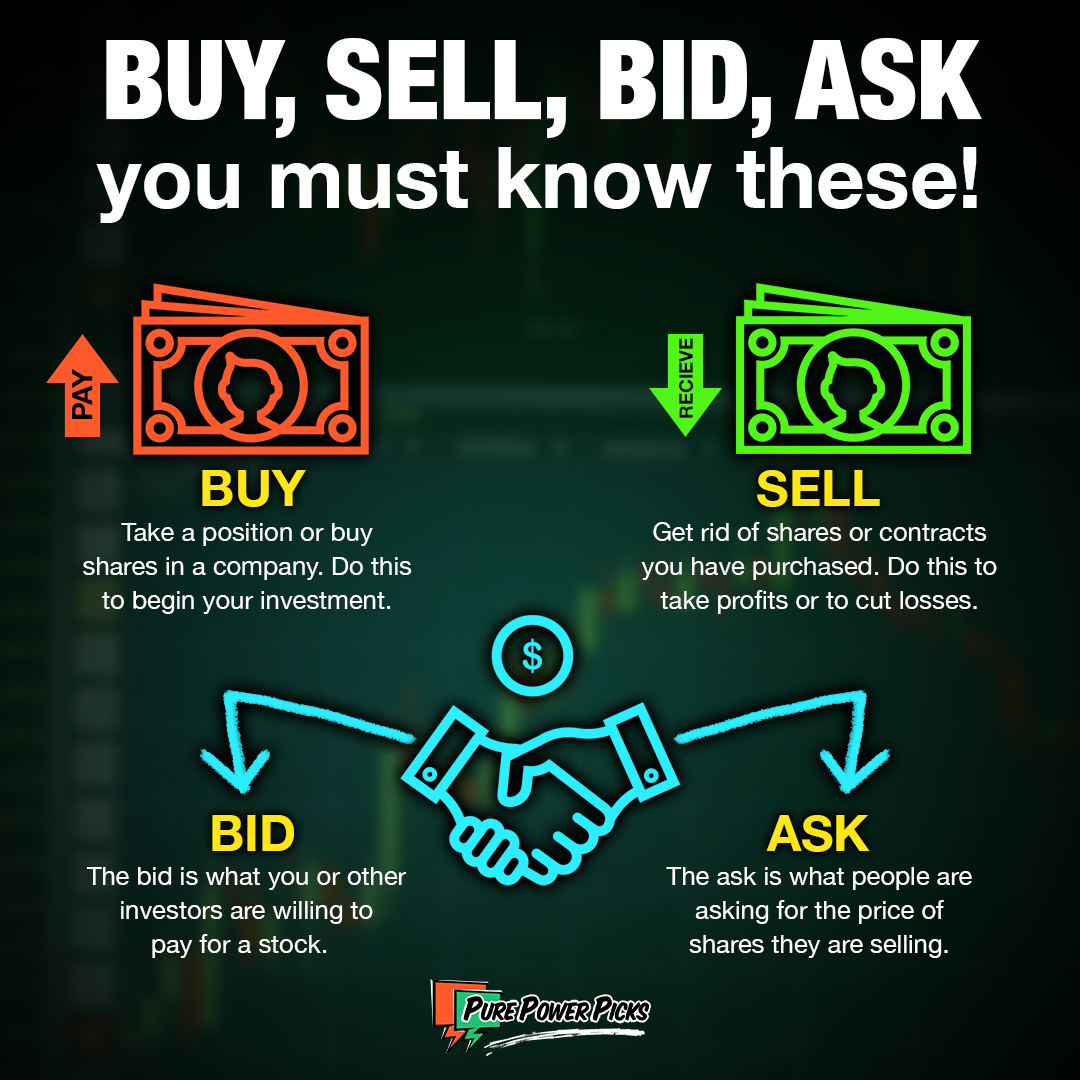
When you place an order to sell, you are usually filled at the bid. That is the price the market is offering you as a seller right now. A single buyer can post multiple bids at different prices, and the highest of them is called the “best bid.”
The bid is dynamic. It moves constantly as new buy orders arrive and old ones get filled or cancelled. A rising bid often signals growing demand, which is one clue traders combine with trading volume essentials to gauge conviction behind a move.
Several forces push the bid up and down throughout the session:
- Linked asset moves: when an underlying stock or index moves, the bids on related options and derivatives adjust with it.
- Market maker activity: market makers post bids and asks to provide liquidity, and their quoting behavior shapes where the best bid sits.
- Trading volume: heavy volume signals strong interest and often tightens and firms up the bid.
- News and geopolitical events: uncertainty widens quotes and can drop the bid fast as buyers step back.
What Is the Ask Price and How Is It Set?
The ask price is the lowest price a seller will accept for an asset. It sits on the supply side of the market and is almost always higher than the bid.
Sellers set the ask because they control the supply. It would make no sense for a seller to offer shares cheaper than a buyer is already willing to pay, so in a functioning market the ask stays above the bid. When you buy at market, you are typically filled at the ask.
Between the bid and ask sits the mid price, the arithmetic average of the two. Traders often use the mid as a fair-value reference when they place limit orders. If you are still building your vocabulary here, our guide to essential trading terms covers these side by side.

Here is a simple hypothetical to lock it in. Say a stock shows a bid of $124.00 and an ask of $124.50. The mid price is ($124.00 + $124.50) / 2 = $124.25. The spread is $124.50 minus $124.00, or 50 cents. If you buy at market, you pay $124.50; if you turn around and sell instantly, you receive $124.00. That 50-cent difference is your immediate cost just for crossing the spread.
In options especially, don’t just hit the ask blindly. Place a limit order at or near the mid price and let the market come to you. On liquid contracts you’ll often get filled better than the posted ask, which adds up fast over dozens of trades. Understanding different order types is how you take control of this.
What Are the 2 Main Differences Between Bid and Ask?
The two main differences are direction and price level. The bid is where buyers act and the ask is where sellers act, and the ask always sits higher than the bid by the amount of the spread.

Difference one is who sets it. Buyers drive the bid, sellers drive the ask. When you want out of a position, you meet the buyers at the bid; when you want in, you meet the sellers at the ask.
Difference two is price level. The ask is always the higher number and the bid is always the lower number. The gap between them, the spread, is your friction cost and a live read on liquidity. A one-penny spread on a heavily traded name is night and day from a wide, choppy spread on a thin one. This matters directly when you’re calculating your breakeven price.
| Factor | Bid | Ask |
|---|---|---|
| Who sets it | Buyers | Sellers |
| Price level | Lower | Higher |
| You use it when | Selling | Buying |
| Reflects | Demand | Supply |
Wide spreads are a hidden tax. On illiquid options, the spread can eat a large chunk of your capital the instant you enter. Always check the spread and the volume before committing, and be careful with market orders during fast moves where prices can jump and cause fat finger errors. Reviewing open interest and liquidity helps you avoid these traps.
How Do You Use Bid and Ask in Real Trading?
You use the bid and ask to decide when to be patient and when to be aggressive. Reading them well tells you how liquid a name is, how much slippage to expect, and where to place your limit orders.
Start by looking at the spread as a percentage of the price. A penny spread on a $50 stock is trivial. A 30-cent spread on a $2 option is significant. If the spread is wide, use a limit order near the mid instead of chasing the ask, and give the fill a moment to work.
Pair the quote with an options chain read so you can see spreads across strikes and expirations at once. Our walkthrough on reading an options chain shows exactly where to look. And when you’re timing an exit near the close, market-on-close orders are worth understanding.
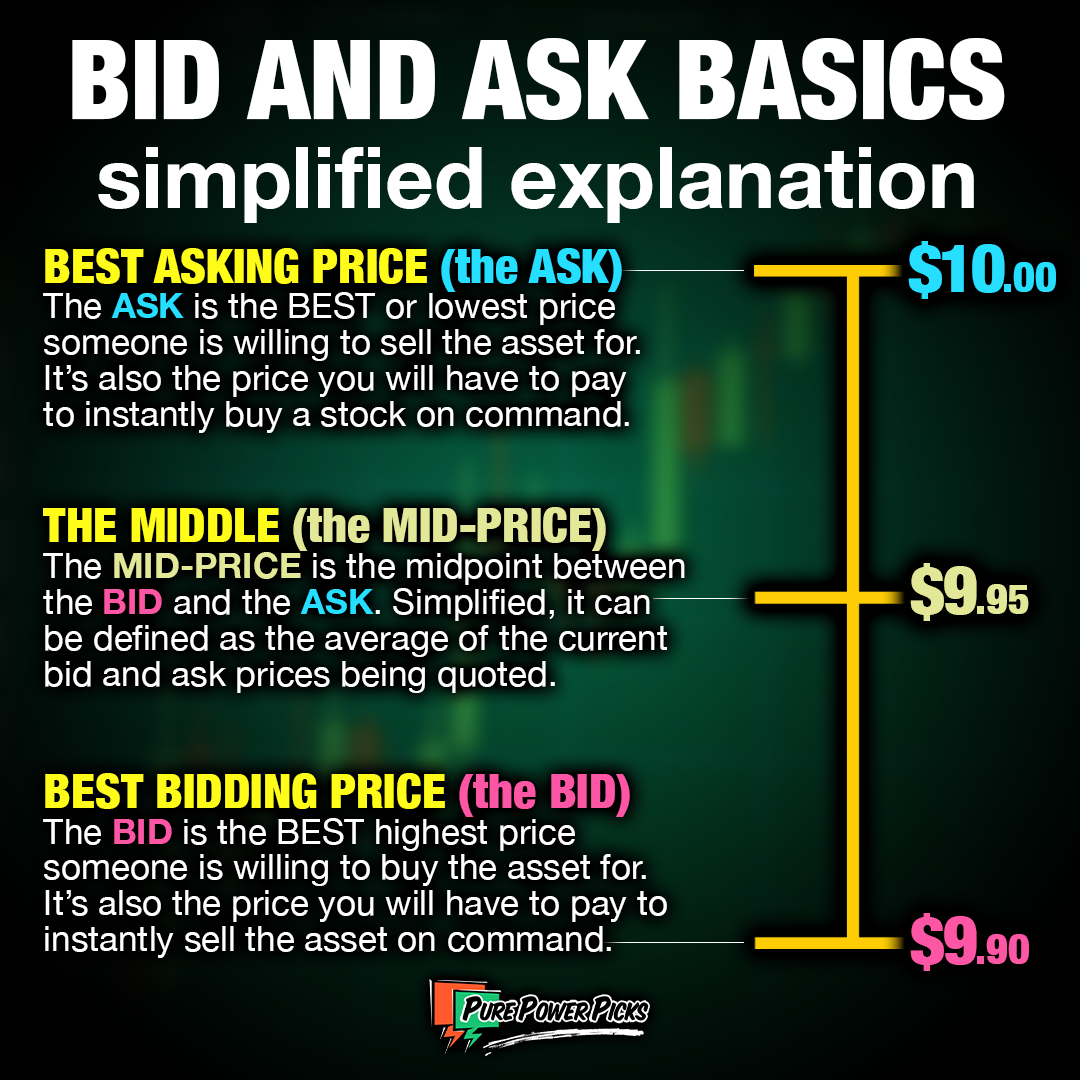
Here’s a quick hypothetical framework. Imagine a call option quoted 1.00 bid, 1.20 ask. Rather than paying 1.20, you set a limit at 1.10, the mid. If the contract is liquid, you may fill there and save 10 cents per share, or $10 per contract, before you even manage the trade. Small edges like this, repeated, are exactly the kind of discipline we teach. If you want to see how structured setups are shared, take a look at how our trade alerts work. For a deeper primer on quote mechanics, the SEC’s explainer on quotes and the Cboe education center are both solid, unbiased resources.
One more note for options traders: leverage amplifies both the good and the bad of a wide spread. If you’re new to that dynamic, brush up on how leverage works and, when a chart looks like it’s fading, learn about spotting a dead cat bounce before you commit to the ask.
Frequently Asked Questions
Do I always buy at the ask and sell at the bid?
Usually, yes. A market order to buy fills at the best available ask, and a market order to sell fills at the best available bid. With limit orders, though, you can post your own price inside the spread and wait for someone to meet you, which often gets a better fill.
What causes a bid-ask spread to widen?
Low trading volume, high volatility, and major news are the main culprits. When fewer participants are active or uncertainty rises, market makers widen quotes to protect themselves, and the spread grows. Thinly traded stocks and far out-of-the-money options tend to have the widest spreads.
What is the mid price and why do traders use it?
The mid price is the average of the bid and the ask, so a 1.00 bid and 1.20 ask gives a 1.10 mid. Traders treat it as a fair-value reference and often place limit orders at or near it to reduce the cost of crossing the spread.
Is a tight spread always better?
Generally, yes. A tight spread signals a liquid, competitive market where you can enter and exit with minimal friction. That said, tight spreads with almost no volume can still be misleading, so always check volume and open interest alongside the spread.
Can I see all the bids and asks, not just the best ones?
Yes, through Level 2 data, which shows the full depth of buy and sell orders stacked at different price levels. It’s a powerful tool for gauging supply and demand pressure. Our guide on reading Level 1 and Level 2 data walks you through it step by step.
Learn to Read the Market Like a Pro
Understanding bid, ask, and spread is just the start. At Pure Power Picks we teach the frameworks, chart setups, and educational alerts that help you build real skill and confidence, one trade idea at a time.
See Membership OptionsDisclaimer: Pure Power Picks provides educational content only and is not a registered investment advisor, broker, or dealer. Nothing here is financial, investment, or trading advice, and no content should be interpreted as a recommendation to buy or sell any security. All examples in this article are hypothetical and for illustration only; they do not represent real trades, real results, or any guarantee of future performance. Trading stocks and options involves substantial risk of loss and is not suitable for every investor. Always do your own research and consult a licensed professional before making any financial decision.